.png)




Revenge Trading: What It Is and How to Stop It
Most traders who blow up their accounts don't do it on one bad trade. They do it on the three or four trades that follow. Revenge trading, the compulsive act of re-entering the market right after a loss, driven by emotion rather than any strategy, is how a manageable setback turns into a session-ending disaster. This article breaks down how it happens, why it's so psychologically hard to resist, and what you can actually do to stop it. If you've ever doubled your position size after a losing trade, keep reading.
Table of Contents
- What Is Revenge Trading?
- The Psychology Behind Revenge Trading
- How to Recognise Revenge Trading in Your Own Behaviour
- Why Revenge Trading Almost Always Makes Things Worse
- How to Stop Revenge Trading Before It Destroys Your Account
- The Bottom Line
- FAQ
What Is Revenge Trading?
Revenge trading is when a trader, after suffering a loss, immediately opens a new trade not because the market signals are strong, but because they want to recover whatthey just lost. The motivation is emotional, not analytical. And thatdistinction is everything.
A disciplined trader looks at a loss and asks, "Does the market still support my setup?" A revenge trader asks, "How do I get my money back?" That second question leads somewhere predictable: rushed entries, oversized positions, trades placed without any real analysis.
It usually follows a specific sequence. You take a loss on a trade you believed in. Frustration kicks in fast. You open another trade, often larger, to make it back. That one loses too. Now the losses are compounding, and you're in a worse emotional state than when you started.
The pattern is well documented across retail trading research. Impulsive trading behaviour following a loss is consistently identified as a leading factor in account drawdowns across all experience levels. It just doesn't feel like a pattern when you're in it.
The Psychology Behind Revenge Trading
Understanding revenge trading psychology matters because the behaviour isn't irrational in the way most people assume. It makes complete sense from a neurological standpoint, which is precisely what makes it dangerous.
Loss aversion, a principle established in behavioural economics, describes how humans feel the pain of a loss roughly twice as intensely as the pleasure of an equivalent gain. Lose $200 and it doesn't register as losing$200. It registers as a threat. Your brain wants that threat gone, immediately.
So you trade again. Fast. The logic, under emotional pressure, seems almost reasonable: "I know this market. I can recover it." But your decision-making is now compromised by exactly the emotional state that produces poor decisions. You're essentially trying to drive straight while staring in the rearview mirror.
The market doesn't care about your losses. It has no memory of what it just did to your account, and emotional urgency changes nothing about whether conditions are actually favourable.
This gets compounded by what's sometimes called the "hot-hand fallacy" working in reverse. After a loss, many traders convince themselves they're "due" for a win. No statistical foundation supports that in forex markets. But it feels compelling when you're sitting there staring at a red position that just closed.
How to Recognise Revenge Trading in Your Own Behaviour
You might be wondering whether what you're doing actually qualifies as revenge trading or simply reassessing a genuine opportunity. Here's how to tell the difference: if you can clearly articulate why the new trade meets your strategy criteria, it probably isn't revenge trading. If the primary reason you're entering is that you just had a losing trade, it almost certainly is.
Watch for these specific warning signs:
- Position size increase: you're sizing larger than your normal risk parameters without a clear reason
- Skipped pre-trade checklist: your usual analysis steps are being bypassed in the urgency to re-enter
- Emotional physical cues: tension, rapid breathing, or frustration while placing the trade
- Narrowed time horizon: you're suddenly focused on minute charts when you normally trade hourly or daily
- Loss fixation: your mental focus is on recovering the specific dollar amount lost, not on the trade setup itself
Three or more of these applying to your last entry is a strong signal that revenge trading is already influencing your behaviour. Most traders recognise the list and quietly realise they've been here before.
Why Revenge Trading Almost Always Makes Things Worse
Accounts showing rapid sequential trade entries following a loss are significantly more likely to exceed daily drawdown limits within the same session. Drawdown, the reduction in account value from its peak, compounds fast when position sizing goes up.
Compounding losses are the core problem. When you increase your position size after a loss to recover faster, you're mathematically increasing the damage that any subsequent losing trade will do. If your standard risk is 1% per trade and you double it out of frustration, a second loss doesn't just hurt twice as much. It also erodes the capital base you need to recover from the first loss.
Leverage amplifies all of this. Leverage means borrowing from your broker to control a position larger than your deposited capital alone allows, and a 1% move against a leveraged position can wipe out 10%, 20%, or more of your usable margin (the funds your broker holds as security), depending on the leverage applied. Under emotional pressure, traders often ignore this entirely. Not ideal, given that leverage is the thing that can end a session in minutes.
The market environment during a loss often continues working against you, too. Volatility spikes, news events, or thin liquidity that caused your initial loss haven't resolved simply because you've opened a new position. You're walking back into the same conditions that caught you the first time.
How to Stop Revenge Trading Before It Destroys Your Account
Stopping revenge trading is less about willpower and more about structure. Here's a practical process you can implement immediately:
- Set a daily loss limit before you trade. Decide in advance the maximum dollar amount or percentage drawdown you'll accept in a single session. When you hit it, you stop. No exceptions.
- Build a mandatory cool-down period into your rules. After any losing trade, enforce a minimum wait before your next entry, whether that's 15 minutes, 30 minutes, or an hour. Use that time to revisit your setup criteria, not to scroll charts looking for the next trade.
- Reduce position size after losses, not increase it. Some professional traders deliberately trade smaller after a string of losses, which keeps them in the game longer and removes the emotional pressure of needing to recover quickly.
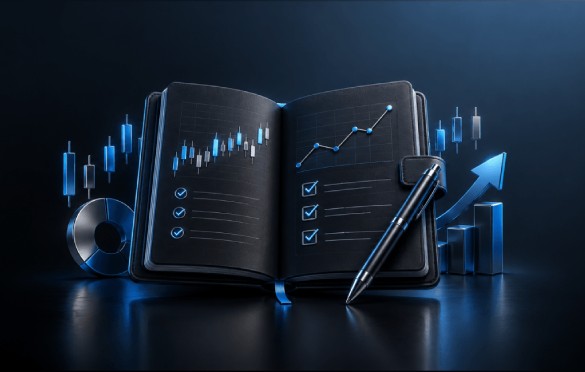
- Keep a trading journal with emotional state entries. Record not just what you traded, but how you felt when you entered. Over time, the pattern becomes visible. You'll start to see correlations between certain emotional states and poor outcomes.
- Use platform tools to enforce your own rules. Brokers offering multi-asset access through platforms like MT4 or MT5, such as CapitalXtend, allow you to set stop-loss parameters (pre-set exit points that close a trade automatically if it moves against you by a specified amount) and use position sizing calculators that help enforce discipline at the execution level before emotion takes over.
The goal isn't to eliminate all losses. Losses are a normal part of trading. The goal is to ensure that your responses to losses are governed by your strategy, not by whatever you happen to be feeling at the time.
The Bottom Line
Revenge trading is one of the most common and destructive patterns in retail forex and CFD trading. Recognising it starts with understanding your own emotional triggers after a loss.
- Loss aversion: the emotional pain of losing drives impulsive re-entries that bypass your strategy
- Position sizing discipline: never increase size to recover losses; reduce it to protect remaining capital
- Structural rules: a pre-set daily loss limit and cool-down period are more effective than willpower alone
- Journaling: tracking emotional state alongside trade data reveals patterns you cannot see in the moment
The traders who last in this market aren't those who never lose. They're those who have built systems that keep their behaviour consistent when it matters most.
FAQ
Q1. What is revenge trading in simple terms?
A. Revenge trading is placing a trade specifically to recover a recent loss, rather than because your analysis supports it. The motivation is emotional, not strategic. It almost always leads to larger losses because your decision-making is compromised at the exact moment you're most at risk.
Q2. Is revenge trading the same as overtrading?
A. They often overlap, but they're not identical. Overtrading means placing too many trades in general, often from boredom or excess confidence. Revenge trading is specifically triggered by a loss and the emotional need to recover it. You can over trade without revenge trading, though revenge trading usually leads to overtrading.
Q3. How do I know if I'm revenge trading or just identifying a new opportunity?
A. Ask yourself one question: would you be entering this trade if you hadn't just suffered a loss? If the honest answer is no, or you're uncertain, that's a strong signal it's revenge trading. Genuine opportunities exist independent of your recent account history.
Q4. Can a daily loss limit actually stop revenge trading?
A. Yes, but only if you enforce it without exceptions. A daily loss limit, which is a pre-set maximum drawdown for one trading session, removes the decision entirely. Once the limit is hit, the session is over. It doesn't require emotional strength in the moment because the rule was set before any loss occurred.



Secure Fund By:



Audited By:

Secured By:

Disclaimer
Disclaimer : The information in this content is not intended to be provided to residents of the USA, Iran, Russia, Myanmar, Canada, Haiti, Suriname, North Korea, Puerto Rico and is not intended to be distributed or used by anyone in any country or jurisdiction area, as in the country or jurisdiction.
Risk Warning: Trading Forex and Financial Instruments involve a high level of risk and may not be suitable for all investors. The high degree of leverage can be either for or against you. Before deciding to invest, carefully consider your investment objectives and risk appetite. You should be aware of the risks associated with financial markets.
Intellectual Property Rights: Unauthorized duplication, publication, or quotation from CapitalXtend's website, in part or whole, without written consent, constitutes a violation of Intellectual Property Rights. Such actions, including downloading or accessing brand elements, will be litigated as infringement.
CapitalXtend is an Esteemed Constituent of XGroup, A Global Leader in Next-gen Fintech Innovation.
© 2021 - 2026 CapitalXtend.com - All Rights Reserved